
Burglary protection
Mechanical security comes first, electronic surveillance as a supplement – only the coordinated combination makes an object truly secure.
The cliché of the nocturnal burglar is considered outdated: around a third of all break-ins into apartments occur during the day – the number of unreported cases is higher because the time of the crime can often no longer be determined, for example during holiday absences. The police have been reporting for years that around 35% of attempted break-ins fail due to good security technology.
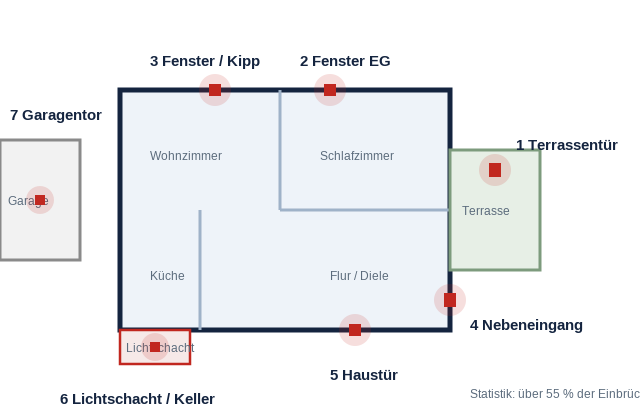
The typical weak points
In every building – especially in single-family and multi-family houses as well as holiday apartments – these points should be particularly secured:
- Main doors and side entrances
- Patio and balcony doors (most common entry points!)
- Ground floor windows and tilt windows
- Shutters and basement windows
- Light wells, garages and outbuildings
Stage 1: Mechanical security
It protects the exterior and makes it considerably more difficult to break in. The following have proven effective:
- Security locks with anti-pull and anti-drill protection
- burglar-resistant doors (tested according to DIN EN 1627, RC classes)
- window locks and mushroom head locks
- burglar-resistant shutters with lift-up protection
- light well covers and grilles
Stage 2: Electronic security
An alarm system does not prevent burglary mechanically – but it has a strong deterrent effect and significantly increases the risk of detection for the perpetrator. Externally visible sensors, an alarm indicator on the façade and a warning sign deter; inside, motion detectors and contacts reliably report every attempt.
Only a well-coordinated combination of mechanical and electronic security offers optimal burglary protection. Let us advise you – we will analyse your property and show you concrete retrofitting options.